Sunday, December 16, 2012

Life of Pi- my take away story (re-post)


Last night I headed out to finish up some Christmas shopping with my 13 year old son, and we decided to see "The Life of Pi".  I have a LONG history with this book.  I read it probably close to 10 years ago, and debated it with friends at the time. A couple of years later my book club read it- and discussed and debated it then, too.  A recent reading of "Beatrice and Virgil" brought me back to Pi and Martel's means of storytelling. 

Now, the film.  I wasn't sure it could be done, but it has been.

The movie is a glittering visual of the book come to life. In some ways, the visuals nicely unfold where as with the book your mind is trying to conjure up the image (I even bought an illustrated copy to assist me on this journey after reading the novel the first time).  Fans of the book won't be diasppointed. 

But I thought the movie would make a conclusion for me. I thought it would help me decide what to think.  It doesn't.  It leaves you left open and raw and wondering what it all really means.  So here is what it means to me, after 10 years of reading, debating discussing.  It may be something entirely different for you, and that is the way Martel intends it to be. As a Christian Mormon faith filled person I am moved by the message of this story.

SPOILERS on all accounts from here on out.

First off, it is important to note that Richard Parker, the tiger, is indeed Pi.  There are many clues to this fact. He admits that he must say this to the reporters when they dig deeper and demand the truth from Him. As he crawls on the boat watch his hands, his mannerisms....he is a tiger.  In the beginning of the story you are given another clue- the priest in the chapel approaches the young Pi and says "you must be Thirsty...." (this was the REAL GIVEN name of the tiger).

At first reading, I felt this view of himself was only to allow Pi to deal with the sin of eating meat.  We know what an offense this is to him.  After viewing the tiger's consumption of  the goat ( an unexplained event presented by the director through the bars of the cage in the movie) he may see this carnivore lifestyle as completely animalistic and a means to survival.  He ate fish meat as well as the meat of the cook's (hyena's) body, while choosing to throw his mother (or the zebra) over board.

 Pi also must 'train' the tiger, as we must harness the animalistic nature (human nature) inside ourselves, in order to survive the elements of the world.  On further thought I feel the tiger represents any offense that distances us from God.  Often we do these things under 'justified' circumstances, as a means of survival.  At some point, however we must stop.  We must surrender to God and confess that we give our life if He wants it.... we give all we have.  Pi does this during the storm.....


After that confession, or coming face to face with God (Pi says he has seen God's face- while Richard Parker, the sinner inside himself, is afraid to see it and hides), God provides the miracle for which we can live righteously again.  In the story, this is the island.  The waters are fresh, the vines are edible, and Pi finds solace and hope again.  He may live on the island forever to hide the from the elements of his journey- or so he thinks.  He is shown a clue (the tooth in the fruits of the trees) as to the detrement of hiding on the island.

We too, can not hide only on the miracles of God.  We must experience the miracles, allow them to change us and nourish us, and then get 'back in our boats' and face our journey.  Remembering the miracles provides us with the hope and sustanence we require as humans to press on.


Eventually, we all must let go of the natural tendancies, or human/animal nature, inside of oursleves.  Pi was exhausted and surrendered completely as Richard Parker left his side.  I find it interesting that the tiger did not try to reconcile or say Goobye- it just left. Pi later reveals this was hard for him, he had grown close to Richard Parker, and wanted a way to say goodbye.  Imagine ourselves, seeking a cerimonious fanfare as we leave sin behind.....it just doesn't work that way.  Often times we just wake up and simply stop sinning.  The animal inside us just walks away, regardless of how attached to it we may feel we are.  I feel Pi had been worn down and became humbled in a way that the sin had no more need of him.  The sin moved on, finding others to engulf.  Part of us may want to thank that nature, for it has taught us and saved us in many ways, but our lives take a turn when we let it go.  We then become a missionary, one who shares their story...a 'good story' of how we were saved. 


The last part of the story always troubled me most.... the line "And so it is with God" spoken by Pi after his audience chooses the 'animal' story over the horrific human story of survivial.  I have read one viewer say this is our choice as humans, to simplify religion down to simple symbols that we can relate with and attach to, as we ignore the bloody and painful realities in the true history of religion.  I find a lot of power in that opinion of the story as a whole, and I agree this is one of the layers of the story, but I am moved to believe something far more personal in the end.


All of us travel a journey of survival.  We fight the tigers within ourselves that draw us to sin and to choose lifestyles below our belief system.  We are given miracles to save us and we are eventually taken to a place of humility where we see the face of God, and we become sanctified.  In the end, we too will have an audience for our journey's story.... one who will judge our story and deem it good or not.  No doubt our story to our final audience will be one of justified actions, simple symbols and sugar coated explanations that we hope paint ourselves incredible in God's eyes.  However, He of course, knows the truth. he knows the blood, the cursings, the leaving of beliefs to survive.  But to Him, it doesn't matter. We win approval as He chooses the symbols of ourselves, the better story, and allows us to forever live in the glory it brings us.


This is a story of power and one of true art, which is all too rare in the media of today.  I hope my ideas (they are just ideas- I am NO EXPERT) open your mind to the possibilities of this story.


 Happy reading. Happy movie viewing.

 Merry Christmas

Saturday, May 21, 2011

The Bridal Wreath and When the Elephants Dance

For May we conquered two books. No secret, no breaking it up, just two full books. I am not sure if this was a great idea, because May is crazy busy for families, moms, and teachers (which we have in our club) but we did it anyway.

Our first pick was The Bridal Wreath, by Sigrid Undset


There was some personal investment in this pick as one of our members was raised in a life rich with Swedish heritage. We met at book club surrounded by by Swedish food and talked of traditions. The food was a great way to start our discussion, which focused on both the story, which tended to be a little bit dreary, and the culture, which was historical and foreign to so much of what we know.

Kristin Lavransdatter is A Norwegian coming of age heroine, juggling the life of appearances, family, and love. Her life with her family is one of hardship and the story is not a happy one by any means. This book is also only the first part of the story, which is usually now found as a trilogy. The language of the book at times was difficult, as well as the names of the characters, but the story is considered a classic to many.

Our group was really divided on whether or not we enjoyed the book. Many felt the wording and names made it difficult to enjoy the flow. A few didn't care for the story and disliked the book, while still some loved the cultural exposure and historical journey the books was, in spite of it's depressing nature. For readers who love books with a classic feel, aren't afraid to tackle a language style that may feel foreign to them, and are interested in the general historical setting and myths this book would be an interesting choice. It was a good pick for us and being split on a book sometimes adds to the discussion.


Next we discussed When the Elephants Dance, by Tess Uriza Holthe.


This book depicts the survival of a Philippine family and their friends as they are trying to hide from the horrors of WWII and it's affect on the Philippines. As Japan and America seek control over the land the cruel means of war ultimately ruins all they have. This book has two main plot lines: the first being the survival of the family. They are searching for food, searching for each other and trying to avoid the cruel Japanese. The second plot line is the stories they begin to share with each other while in hiding. Both mythical and heart wrenching, each one brings a history to the table. The war is violent, riddled with torture, rape, and violent killings. The book is not afraid to depict these scenes. The stories shared and personal and strange, beautiful and fun, varying from each story teller.

We pretty much all were just amazed by the book and the stories told. It is a story of hope and family and love amidst horror and violence. It will open your eyes to a part of Philippine history that most of us live unaware of. The book is well written and characters very rich. This was a great discussion book.

Next month will be reading The Immortal Life of Henrietta Lacks, and stay tuned for a few snapshots from our reading retreat!

Saturday, March 26, 2011

Three Cups of Tea- March Read- plus the SECRET book


Well, we finished Three Cups of Tea (or most of us finished Three Cups of Tea) with a lot to say about it. We loved the story of Greg and his drive to accomplish his task- fulfill his promise to build a school after failing to climb K2.

We were amazed with some of the side notes of the life of a mountain climber. The months without showering, the cold weather climbs, and the mangy lifestyle off the mountain. But then again, the determination, the goal setting, the fearlessness of the lives is equally stunning.

His story is filled with obstacles and problems, enough to stop a regular person in their tracks- but not Greg. He makes it happen.

The biggest debate over the book was the writing. I felt like it was reading a really long report written by a smitten high schooler. Some of the members felt the writing was too scattered, and the absence of a first person narrative kept us fro really connecting with the main character. Some felt the writing wasn't great, and the author seemed to dollop just a little too much praise on the hero of the story. Others, however, had no problem getting caught up in the story and enjoying it for what it really was- a triumph of one person truly making the world a better place.


Our second book, also our secret book (no bashing allowed) was The Violent Bear It Away, by Flannery O'Connor.
Here is the advice form our book club on this book. Do your homework first. The book is littered with symbolish, types, and spiritual messages on different levels. If you read it straight as a Southern-Gothic (do I feel kind of cool saying that? Of course I do) you will miss what the author is trying to create.

You will question yourself on the many symbols of confession, baptism, Christ and the sacrament, and the call to destiny. It will not leave you unaffected as the violence of the novel will grab your attention as it whispers the message along the way. All of this being said, however, needs to be post scripted with another tip; don't take the book to seriously. When and uncle is telling his nephew to just roll his dead body down the stairs to get momentum to his future gravesite it is okay to laugh to yourself. There a lot of sarcastic and funny moments to be enjoyed.

My personal note is to remind you to read this with a friend. You will need to discuss it, pick their brains, and bounce off ideas form each other. I still find myself pondering this book and why the author chose to write it the way she did. When that happens weeks after I have finished a book I know I read something special. This is a departure fro your typical read, and we all appreciated that.
For next month: read Half Broke Horses by Jeannette Walls and our next secret book, The Last Time They Met by Anita Shreve. (Chills just went up my spine).

Come ready to argue, cry, or cuss. But come ready to discuss.

Thursday, January 13, 2011

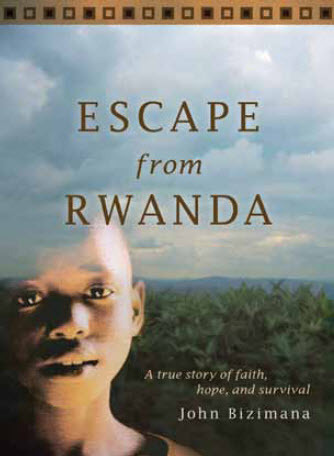
Escape From Rwanda with John Bizimana


Our January book club was a special event that included dinner and a discussion with the author of Escape From Rwanda, John Bizimana. I knew it would be an interesting discussion when he walked in, surrounded by many friends, and quietly whispered to the girl next to him..."wow, this is so weird. They are all holding my book. " Yes, John...that's how we roll!


John's story (working title A Wayfaring Man tossed out by publishers) is one of adversity, but amazing hope. John was just a boy as his mother gathered up her children and a few precious belongings and trudged out of the genocide smitten land of Rwanda. The details of the story are what followed after. Living one life while dreaming of more. Struggling to find a place to fit in, struggling to find something to believe in. In spite of the horrific event from his childhood you could say he really just struggled with the same things we all do, and that is what makes his story so universal.

This little memoir style book is very inspirational. If a man can be as gentle, kind, and humble as John is after what he has seen, then can't we all be that way? We discussed the tragedy of Rwanda, the lands where he lived, the languages he speaks. We discussed his memories and our own feelings, and the little miracle it is that someone heard his story, encouraged him to share it, it crossed the desk of a publisher (without an agent attached to promote it) who also felt it was a story that needed to be told, and now it can be found on the shelf at the book store.

While John softly concludes "I'm not a writer" we all have to disagree. There are different types of writing, and different reasons to read. If someone can write a book that inspires you to have more hope, to dream a little bigger, and to remember to thank God for the miracles we sometimes call coincidence then I say you have earned the title.

If just one reader (like me) picks up his story and walks away determined to learn more about Rwanda and the reasons why something so maddening could happen, then you've done your job. In learning how something like this can happen we also learn some other critical information......how to keep it from happening again.

For this reason, I will be forever grateful I read this story- and met the life behind it.


you may also like to read another member's review at My Way. Click for more insight!


Saturday, December 11, 2010

What is a "Secret Book"?

You are dying to know.

But first let me tell you we met today for our usual flurry of year end reviews. We pass around favorite Christmas books- laugh about not-so-favorite books (sorry, Richard Paul Evans, but Promise Me has almost become a one title joke and punch line in our club), and talk about other books that have left an impression on us this year. Oh yeah....and we eat. We had lots of brunchy yummy food, cookies, rolls, even bottled Cream Soda in a throw back to Christmases long ago. It is always one of our favorite get togethers. We discussed our December book, The Screwtape Letters, which will be included in a later post.

Now.... the secret book......

Our club has a secret book we throw in every once in a while. It didn't start on purpose, it was just that while we were reading our book of the month someone would start gabbing about a book they were utterly enjoying and we all had to read it, too. We all kind of snuck it in on the side, never officially picking it, but reading it and discussing it.

One rule of the secret book is you are not allowed to bash it. Someone is invested in the secret book. Someone loves it so much, that bad mouthing it would just be cruel. So we, as a group, abstain. Thus it becomes a "secret" read.

Our first secret book

What a book it was. I definitely recommend it if your club hasn't read it yet. Extremely touching, yet hilarious and heart breaking all at once.

Last year we all seemed to find time to read this pick, without picking it

and the books that followed. They were all part of our discussions, as the year passed. I personally LOVED the journey Suzanne Collins took us on (and intend to use it to preach to my children about the importance of self-reliance every chance I get.)


This year we are picking a couple of secret books....we are feeling very ambitious, so quite a few more books than usual have wiggled there way into our To Be Read pile. I will share our first one with you now, which we may not quite get to until Feb or March, by Flannery O'Connor.

I'd love to tell you more about it....

but it's a secret.

Thursday, November 11, 2010

November Discussion 2- In the Woods


In The Woods by Tana French

First, let's get this off our chest- is it equally offensive when the Brits drop the f-bomb? Just wondering.

In The Woods.

Did you hate it? Did you love it? Did you throw your book against the wall when you were done (like me)?

When Rob Ryan and his spunky, tough-but cute- partner take the case of a murder he is brought back to the scene of his kidnapping (?) and disappearance of his two best childhood friends. The case brings up anxieties, tensions, and night sweats as he tries to piece his memory together in a way that may help the present investigation.

The case has it all.....rape victims, rape witnesses, strange families with weird relationships, weird work site employees, a history of beast like folklore, missing persons, and a beautiful, troubled sister.

We picked it for more of a thriller for our Halloween read (How did it do? Did it keep your attention?)

French did an excellent job in character portrayal. That was her strength for me. It was hard, though, to slowly dislike the main character (and perspective voice) as he revealed himself to be just a commitment phobic, scamming kind of a guy as the story unfolded.

I don't want to include any spoilers here, in case you haven't read it yet, so I am again including a link to LitLovers for their In The Woods discussion guide (please scroll down for the publisher discussion questions).

I will leave you with one question.....
will you be reading book 2?


I am not sure if I trust French enough to go on another joy ride.

November Discussion- The Fountainhead

The month is finally here- we have finished our "Semi-Annual" book, The Fountainhead by Ayn Rand.

Last year we read both Atlas Shrugged and Anthem, also by Rand. We were kind of surprised how much we enjoyed the books and the discussions as a group, so this year we added Fountainhead to our picks.

In talking to the members of the group it was agreed this book was a harder read. The characters, while great at symbolizing their chosen quality, were completely unrealistic, and many members of the group had a hard time sympathizing with them. The bulk of the book, for me, towards the middle lost momentum. As the conclusion drew near, and the characters began to reveal their true motives in their words, it helped book come together and the spotty conversations make more sense.

There was no lovable Francisco, and Dominique had none of the spunk we loved out of Dagny, but really- does that matter?

I am wondering why I, as a reader, tend to always compare books to each other- especially by the same author. In reality, each book tends to be it's own unique journey and universe, and I am now questioning if this tendency hindered my enjoyment of Fountainhead....but enough about that. Let's get to the discussion.

Here is a great little background and a few questions you can refer to before book club. If you have a little more time to spend you can get into Google books and search all sorts of Rand commentary. I am going to just leave a few of my general thoughts and we will put it all together at club. There are many, many discussions, essays and articles about the book online.

I absolutely loved the theme of the producers vs. the takers. It ran parallel to the idea of the individual vs. the objective, and to be a true producer we must remain true to our integrity as an individual. Did Roark take this too far? What about Toohey- as a "Second hander' how far could this take him? Is it true that the greatness of one man can diminish those around him?

How did you feel about the idea of buildings being viewed as a living being? Roark had to rescue a few of Peter's sketches, as 'he would have had to rescue a drowning man'. Did this symbol of a man draw you in or push you out as a reader?

Did you envy the relationship of Wynand and Roark? (how did it compare to Galt and D'Anconia?) What about a male/female relationship in the book? How did Rand choose to portray romantic love, if at all?

Also, think on the following ridiculously simplified definitions

altruism- the unselfish regard or devotion for the welfare of others- in animals, this regard can be at their own demise as it is harmful to themselves, but not for the species (do you feel Rand views humans as mere evolved animals?)
objectivism-reality exists independent of conscious, and we have contact with reality through sense perception, we can gain knowledge through reasoning and pursue happiness and self-interest, and socially should be allowed individual rights. (much more here on the definition) Also at the previous link are definitions for reason, ethics, politics and more as viewed my Rand.

These two themes propel the 3 books we have read so far. Which one best conveyed the message to you?

Finally, if you really want to dig deeper and find out more about objectivism and Rand's philosophy please go to the Ayn Rand Institute (trust me and give yourself some time, this is a very interesting website).

Finally, I am still experiencing PTSD from the loss of my copy of the book. I had it tabbed, highlighted, scribbled up and ready to go. So many pages filled with amazing quotes.....I am mourning my loss. Do not stop me from ordering large amounts of chocolate and Diet Coke at our dinner. Thank you.

My philosophy, in essence, is the concept of man as a heroic being, with his own happiness as the moral purpose of his life, with productive achievement as his noblest activity, and reason as his only absolute.

—Ayn Rand, Atlas Shrugged[4]